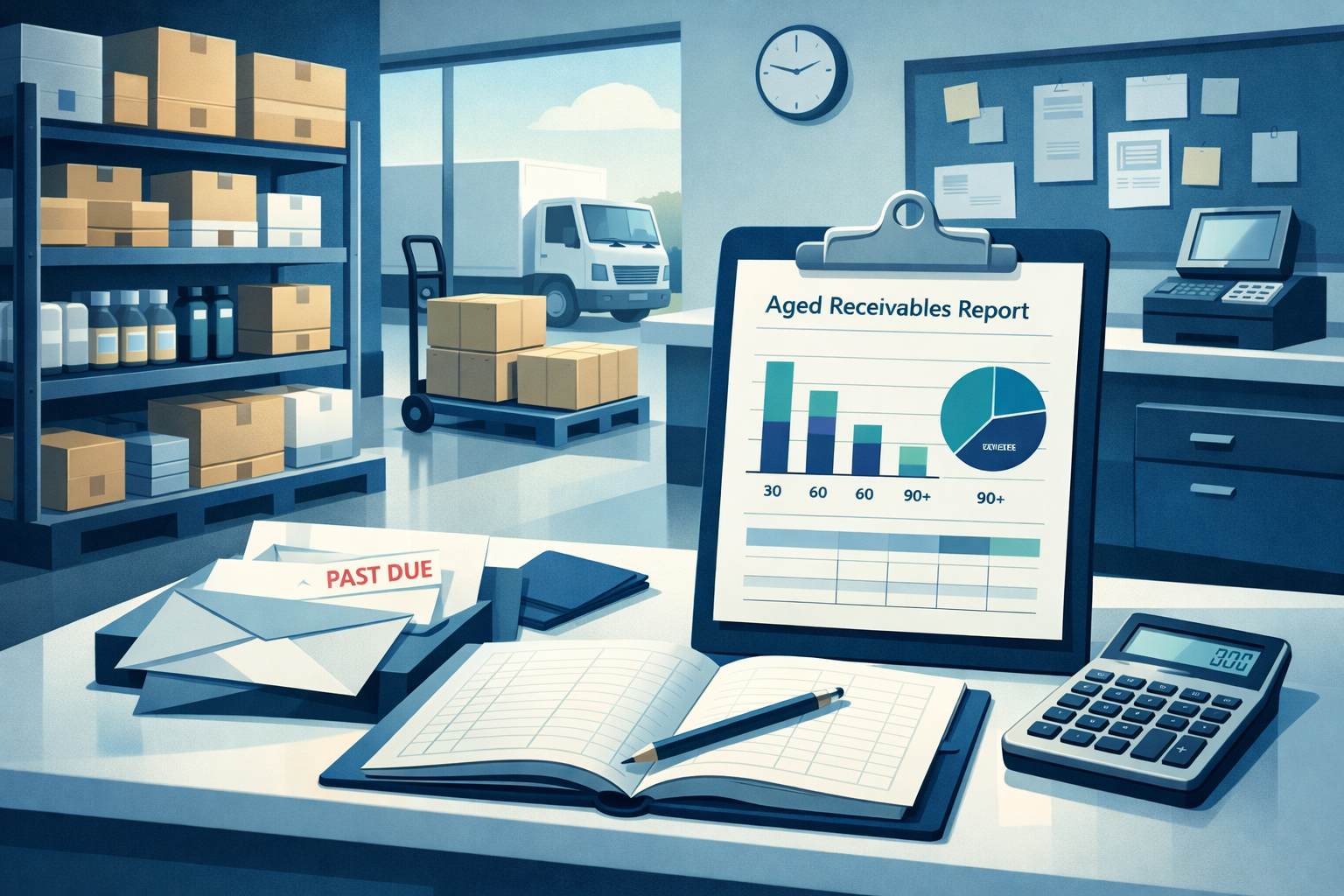
What is accounts receivable?
Accounts receivable (AR) is the money your business has earned by providing goods or services but has not yet collected in cash. On accrual financial statements, those unpaid invoices appear on the balance sheet as AR and represent claims on future cash. Bookkeeping systems typically track AR in a customer subledger tied to the general ledger control account.
Why accounts receivable matters for small businesses
AR affects both cash flow and financial reporting. High or aging receivables can signal incoming cash or potential shortfalls, influence reported revenue and working capital (on accrual records), and shape lender, investor, and owner decisions. Clear, accurate AR records reduce surprises at year‑end and support better business decisions.
Cash basis vs. accrual basis — how AR is treated
Understanding your accounting method determines whether uncollected invoices appear on year‑end statements:
Accrual basis: Revenue is recorded when earned. Unpaid invoices are recorded as accounts receivable.
Cash basis: Revenue is recorded when cash is received. Unpaid invoices are not recorded as revenue until payment arrives.
If you are unsure which method your business uses or how it affects year‑end reporting, discuss the implications with your accountant or tax advisor.
Common causes of elevated or problematic AR
Lenient or unclear credit terms.
Poor invoicing practices or billing errors.
Lack of follow‑up on past‑due invoices.
Customer financial difficulties or disputes over goods/services.
Warning signs to watch for
Growing balances in the AR ledger without matching collections.
An increasing share of receivables in older aging buckets (longer days outstanding).
Discrepancies between the AR subledger and the general ledger control account.
Repeated customer disputes or returned invoices.
Practical steps to take before the 2026 year‑end
Prioritize the following to improve year‑end accuracy and reduce cash‑flow risk:
Confirm your accounting method and how it affects revenue recognition for outstanding invoices.
Reconcile the AR subledger to the general ledger monthly and again before year‑end to identify and correct discrepancies.
Run an AR aging report and focus collection efforts on the oldest balances.
Document collection efforts and customer communications for overdue amounts—this supports any later decisions about allowances or write‑offs.
Establish or review written policies for credit terms, allowances for doubtful accounts, and write‑offs, and discuss these policies with your accountant before applying year‑end adjustments.
Prepare a summary of aged receivables and gather supporting documentation (invoices, contracts, delivery confirmations, correspondence) for amounts that may be doubtful.
Recordkeeping and internal controls
Keep complete copies of invoices, contracts, and delivery or service completion evidence.
Use consistent, written customer credit terms and record accepted terms in your files.
Assign responsibility for collections and set up regular AR review meetings or reports.
When to consult an accounting or tax professional
Some situations warrant professional advice and verification against current federal and California guidance:
Uncertainty about revenue recognition under your accounting method.
Large or longstanding receivables where collectability is doubtful.
Potential impacts on tax filings, loan covenants, or financial statement presentation.
Complex customer disputes, customer bankruptcy, or multistate sales issues.
Decisions about write‑offs, allowances, and tax treatment should be made in consultation with a qualified accounting or tax professional and verified against current authoritative guidance.
Practical examples and use cases
Service firm: A consulting firm bills after completing an engagement and records the invoice as AR on accrual records. The owner should reconcile the invoice, monitor payment timing, and document follow‑up if payment is delayed.
Wholesale supplier: A wholesaler selling on net terms should review aging reports when customers fall behind, evaluate collectability, and discuss options with their accountant for any allowance or write‑off.
Contractor with progress billing: Progress invoices are AR under accrual accounting until paid; keep records of completed work, invoices, and payment communications to support year‑end reporting.
Frequently asked questions
Q: How does accounts receivable differ from a bank deposit?
A: AR represents amounts customers owe you; a bank deposit represents cash you already have. AR becomes cash only when customers pay and you deposit the payment.
Q: If a customer hasn’t paid by year‑end, do I always have to write the amount off?
A: Not always. Whether to write off an AR balance depends on collectability, your accounting policies, and applicable accounting standards. Documented collection efforts and professional advice should guide write‑off decisions.
Q: Should I change my accounting method to avoid dealing with AR?
A: Changing accounting methods is a significant decision with potential tax and reporting implications. Consult an accounting professional to evaluate the consequences before making a change.
Q: What documentation should I keep for uncollected invoices?
A: Keep the invoice, contract or order confirmation, delivery or service completion evidence, correspondence about payment, and records of collection efforts. These documents support financial reporting and any future adjustments.
Practical takeaways
Accounts receivable are claims on future cash—manage them proactively to protect cash flow.
Reconcile AR records regularly and review aging reports monthly and before year‑end.
Document collection efforts and maintain consistent credit and write‑off policies.
Consult a qualified accounting or tax professional to confirm revenue recognition, allowances, and any tax consequences—especially for year‑end adjustments.
Next steps and how ALP can help
Download ALP Accounting Services’ AR year‑end checklist or request a review of your AR reconciliations.
Schedule a consultation with an ALP accountant to discuss how your accounting method affects AR reporting for the 2026 year‑end.
Contact ALP for bookkeeping cleanup services if your AR subledger and general ledger are out of sync.
Note: Rules and procedures for revenue recognition, bad debt deductions, and other tax and reporting matters change over time and may vary between federal and California authorities. Before applying tax or year‑end adjustments, consult a qualified accountant or tax advisor to verify current authoritative guidance relevant to your situation.