Why the balance sheet matters
A balance sheet is a snapshot of your business at a specific date: what you own, what you owe, and the owner’s stake. For small business owners, bookkeepers, and entrepreneurs, reading that snapshot correctly helps with cash decisions, loan conversations, inventory planning, and year‑end tax readiness (including the 2026 year‑end).
What a balance sheet is — in plain language
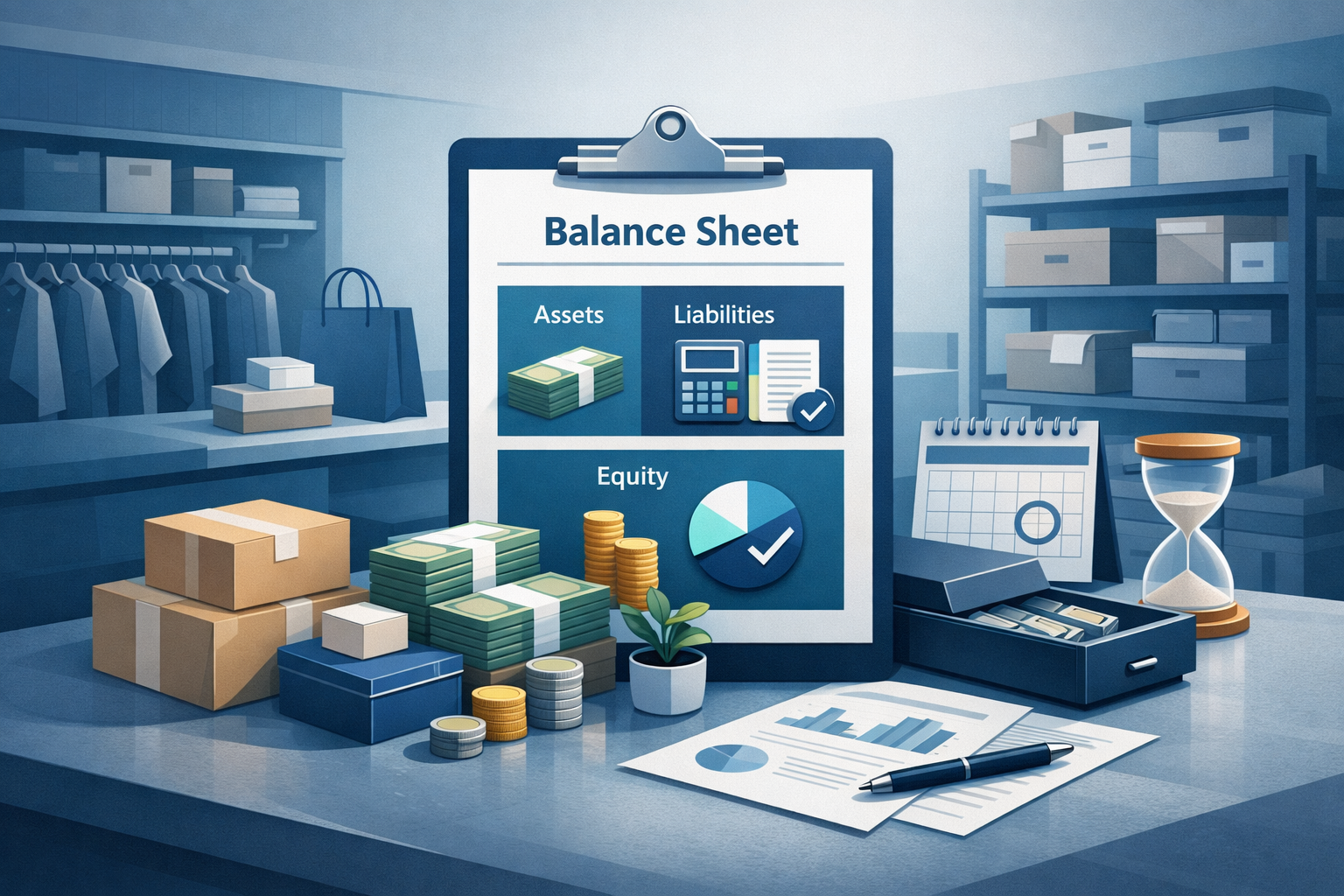
The balance sheet lists three broad categories at a single point in time:
Assets: What the business owns or controls (cash, accounts receivable, inventory, equipment).
Liabilities: What the business owes (short‑term bills, loans, payroll liabilities).
Equity: The owner’s residual interest — contributions, distributions, and accumulated results.
Remember: the balance sheet is a point‑in‑time snapshot. Profitability over a period is reported on the profit‑and‑loss (income) statement.
Key components and what changes usually mean
Assets
Typical asset examples include cash, customer receivables, inventory, and fixed assets like equipment. Drops in cash or buildup of slow‑moving inventory may indicate liquidity or operational problems that need attention.
Liabilities
Common liabilities are short‑term trade payables, credit‑card balances, loans, and payroll or sales‑tax liabilities. Monitoring due dates and correct classification (current vs. long‑term) helps avoid surprises and compliance issues.
Equity
Equity reflects owner contributions, draws or distributions, and cumulative profits or losses. Significant recent draws or unrecorded owner transactions can change the equity picture and should be documented.
What the balance sheet can — and cannot — tell you
What it can tell you: Liquidity (ability to meet near‑term obligations), solvency (capacity to cover total obligations over time), and the accumulation of past results.
What it can’t tell you: It does not show period profitability (that’s the income statement), and it may not reflect market values or off‑balance contingencies.
Warning signs to watch for before year‑end
Watch your balance sheet for these observable issues that commonly require action:
Low cash relative to upcoming bills or payroll cycles.
Rapidly rising accounts payable while cash and receivables stagnate.
Growing accounts receivable or inventory that isn’t moving or collecting.
Misclassified balances (for example, a long‑term loan recorded as current, or vice versa).
Unreconciled bank accounts, outstanding checks, or unexplained clearing account balances.
Appropriate numeric thresholds and ratios depend on your business. If you need benchmarks or ratios, consult an accountant who can apply standards that match your industry and circumstances.
Practical takeaways you can act on now
Reconcile bank and credit‑card accounts monthly and clear reconciling items before year‑end.
Review receivables and inventory for collectibility or obsolescence; follow up on slow payers.
Confirm liability classifications (current vs. long‑term) and verify fixed asset records.
Document owner draws, capital contributions, and any large one‑time transactions so they appear correctly on the balance sheet.
Prepare a short list of anomalies and questions to bring to your accountant before year‑end.
Year‑end balance‑sheet checklist
Use this sequential checklist to prepare your balance sheet for year‑end review:
Reconcile bank and credit‑card statements; investigate and clear outstanding reconciling items.
Confirm accounts receivable — send statements, follow up on overdue invoices, and evaluate collectibility.
Review inventory counts and identify slow‑moving or obsolete items for adjustment.
Verify loan and lease statements; confirm balances and current vs. long‑term portions.
Reconcile payroll clearing accounts and confirm payroll tax deposits and filings are up to date.
Review fixed asset schedules and depreciation records for accuracy.
Document owner contributions and distributions so equity reflects reality.
Compile supporting statements and documents to bring to your accountant for year‑end review.
When to consult an accounting or tax professional
Reach out to an accountant or tax professional early when you encounter:
Complicated or large transactions that affect classification.
Ambiguous liability or asset treatments (for example, current vs. long‑term classification questions).
Payroll, tax, or compliance questions — especially where California state rules may apply.
Plans to change entity structure, take significant owner distributions, or use financial statements for loans or investors.
State and federal tax, payroll, and filing rules can affect balance‑sheet items. Confirm any tax or regulatory implications with official sources and a qualified professional before acting.
A practical example: a neighborhood bakery
A California bakery reviews its monthly balance sheet and notices cash is down while accounts payable have increased and perishable inventory remains high. The owner follows the checklist: reconciles bank and credit‑card statements, reaches out about a large overdue invoice, reviews inventory turnover with staff, and flags a payroll clearing account for specialist review. The owner also asks the accountant about a loan covenant. This sequence shows how a balance‑sheet snapshot leads to concrete follow‑up actions.
Frequently asked questions
Is a balance sheet the same as a profit‑and‑loss statement?
No. The balance sheet is a snapshot of what the business owns and owes at a moment in time. The profit‑and‑loss (income) statement shows performance over a period.How often should I review my balance sheet?
Monthly or quarterly reviews are common for small businesses, but frequency depends on transaction volume and management needs. Regular reconciliation reduces year‑end surprises.What if I find misclassified items?
Correct the classifications in your books, document why the change was made, and consult an accountant if the misclassification may affect tax filings or regulatory reports.Will the balance sheet tell me if I owe more tax?
Not directly. The balance sheet can reveal unpaid liabilities or accruals that relate to tax or payroll obligations, but tax consequences depend on tax rules and period activity. Verify tax implications with a tax professional and official agency guidance.
California considerations
Certain balance‑sheet items can interact with California payroll, sales tax, and filing rules. Because state rules vary and change, verify California‑specific tax and regulatory implications with official agencies (for example, FTB, EDD, CDTFA) and your accountant before taking action.
Next steps — practical three‑point plan
After reading this guide, take these three actions:
Review your balance sheet for the warning signs listed above.
Reconcile accounts and correct obvious misclassifications before year‑end.
Schedule a year‑end review with a qualified accountant to address tax, payroll, or California‑specific questions.
Calls to action
Download ALP’s year‑end balance‑sheet checklist to guide your review before year‑end.
Schedule a bookkeeping cleanup or year‑end review with ALP Accounting Services to correct misclassifications and prepare for tax season.
Sign up for a short “balance‑sheet basics” webinar or newsletter for monthly reminders and practical tips.
If you spot payroll or tax‑related anomalies, contact ALP to verify California‑specific obligations with a professional.
Final note
A calm, systematic review of your balance sheet reduces last‑minute surprises and supports better decisions. When in doubt about classification or tax consequences, consult a licensed accountant or tax professional rather than guessing.